
Burnaby Physio & Massage Therapy
Sciatica Treatments

Treatments
Sciatica Treatment in Burnaby - EastWest Physiotherapy
Relieve Back Pain, Leg Pain, Numbness & Tingling With Evidence-Based Physiotherapy Treatments
If you have ever felt sharp pain, numbness, or tingling going from your lower back down your leg, you know how disruptive and uncomfortable sciatica can be. Sciatica affects more than just your mobility – it impacts your sleep, mood, focus, and your ability to work or enjoy everyday life.
At EastWest Physiotherapy in Burnaby, our one-to-one physiotherapy approach helps and guides you recover from sciatica by reducing nerve irritation, improving mobility, and addressing the root cause of your symptoms using research-supported techniques.
What Is Sciatica?
Sciatica refers to pain that originates from irritation of the sciatic nerve, the largest and longest nerve in the body.
This nerve is formed by five nerve roots (L4, L5, S1, S2, S3). These nerve roots exit the spine, join together deep in the buttock, and travel down the back of the leg into the foot.
The sciatic nerve controls:
- Leg (Hamstrings) and foot muscle function (lifting and pushing off the foot, foot stability and maintaining arch support)
- Sensation such as touch, temperature, and pain (back of thigh, outer part of lower leg and the foot)
- Movement patterns like walking, bending, and lifting
- Reflexes (Hamstring and ankle)
When the nerve becomes compressed, stretched, inflamed, or irritated, symptoms follow.
Sciatica Treatment in Burnaby – Our Evidence-Based Approach
At EastWest Physiotherapy, we treat the underlying cause of your sciatic nerve irritation, not just the symptoms. Every session is one-to-one in a private room, allowing us to assess, treat, and progress your recovery with personalized precision.
Research supports active treatment rather than prolonged bed rest, which is not good for recovery. A combination of guided progressive movements, nerve-friendly positioning, and targeted Physiotherapy treatment techniques leads to faster improvement.
Your Treatment Plan May Include:
Manual Therapy
Gentle joint mobilizations and soft tissue techniques help: Reduce pressure on the nerve Improve movement in the spine and hip Release muscle tension in glutes, piriformis, hamstrings, and lumbar area
Exercise Therapy
Guided exercises help: Reduce nerve sensitivity Strengthen core and hip stabilizers Improve mobility of the nerve Prevent recurrence We design a program specific to your symptoms (extension-based, flexion-based, directional preference exercises depending on your response).
Electrotherapy
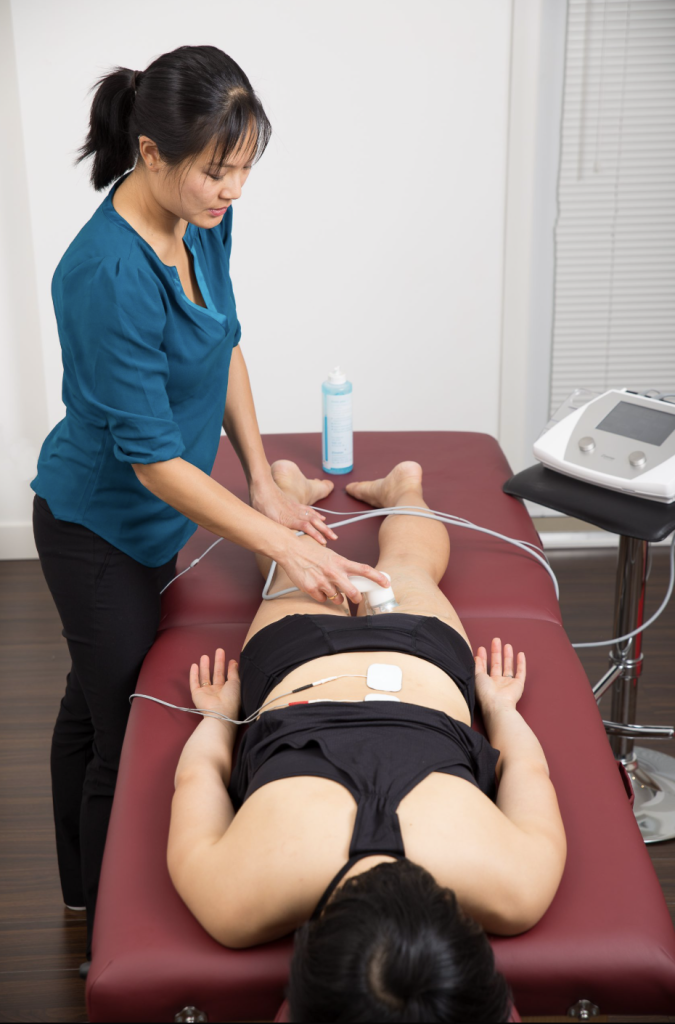
We use therapeutic currents such as TENS, IFC, Traebert, Ultrasound and NMES to: Reduce inflammation Improve circulation Calm irritated nerves
Acupuncture or IMS (Dry Needling)
Research shows acupuncture can help: Reduce muscle guarding and tension Increase blood flow Release endorphins Decrease nerve-related pain
Super Inductive System (SIS)
This Advanced Physiotherapy modality technology uses high-intensity electromagnetic therapy to: Reduce nerve pain immediately Relax tight muscles Improve mobility Accelerate nerve tissue healing
Postural & Ergonomic Coaching
Small changes in sitting, sleeping, and lifting habits can dramatically reduce sciatic nerve irritation.
What to Expect at Your Sciatica Appointment
Detailed Assessment
We examine your movement, posture, nerve mobility, and functional patterns to locate the exact source of irritation.
Personalized Treatment Plan
We create a plan based on your symptoms, lifestyle, and healing stage.
Hands-On Treatment
Targeted manual therapy, acupuncture, and nerve-friendly exercises begin right away.
Education & Home Plan
We show you which movements help or worsen symptoms, and teach you how to manage flare-ups.
Progress Monitoring
Your symptoms guide the treatment progression and we adjust techniques as your nerve calms and strength returns.
Sciatica Symptoms
Research shows sciatica often presents with clear patterns. Common symptoms include:
- Pain down the leg (sometimes worse than low back pain)
- Radiating pain into the calf, ankle, or foot
- Numbness or tingling following the same path as the pain
- Electric, sharp, or burning sensations
- Muscle Weakness in the leg or foot
- Difficult to walk, stand and doing stairs
- Feeling worse when sitting, bending, coughing, or first getting up
A physiotherapist can usually diagnose sciatica through a combination of:
- Thorough history-taking and description of pain patterns
- Physical exam (special orthopedic tests)
- Nerve testing (myotomes, dermatomes, reflexes)
- Gait and posture assessment
- Ruling out other potential conditions
Why Choose EastWest Physiotherapy for Sciatica Treatment?
- One-to-one physiotherapy care
- Private treatment rooms
- Evidence-based Western rehabilitation
- Integrated Eastern techniques (acupuncture, cupping)
- Advanced Technology (Super Inductive System Therapy)
- Convenient location near Brentwood and North Burnaby
Frequently Asked Questions (FAQ) – Sciatica Treatment in Burnaby
Can sciatica go away on its own?
Sometimes, but not always.
The pain may settle temporarily, but if the underlying cause (disc irritation, poor posture, weak core muscles, or nerve tension) is not addressed, symptoms commonly return. Many patients notice repeated flare-ups months later.
Physiotherapy helps fix the mechanical problem causing the nerve irritation, which reduces recurrence.
Should I rest or keep moving with sciatica?
Gentle movement is usually better than bed rest.
Complete rest can actually slow healing because the sciatic nerve becomes stiffer and more sensitive. The key is doing the right movements — not just any activity.
A physiotherapist will show you specific positions and exercises that reduce pressure on the nerve while still allowing safe movement.
Is walking good for sciatica?
Yes — in most cases. Short, frequent walks help:
-
Improve circulation
-
Reduce nerve sensitivity
-
Prevent stiffness
However, if walking sharply increases leg pain, tingling, or numbness, you may be walking with the wrong posture or stride. We often adjust walking mechanics and posture to make walking therapeutic rather than aggravating.
What makes sciatica worse?
Common aggravating activities include:
-
Prolonged sitting
-
Slouching posture
-
Bending forward repeatedly
-
Heavy lifting
-
Sudden twisting
-
Long car rides
Even coughing or sneezing may temporarily increase symptoms because it briefly raises pressure around the nerve.
When is sciatica serious?
Seek urgent medical care if you develop:
-
Progressive leg weakness
-
Foot drop (difficulty lifting the foot)
-
Loss of bowel or bladder control
-
Numbness around the groin or saddle area
These symptoms may indicate a rare but serious condition called cauda equina syndrome.
Does a slipped disc always require surgery?
No.
Research consistently shows most disc herniations heal without surgery. Physiotherapy is usually the first recommended treatment because it:
-
Reduces nerve inflammation
-
Improves movement
-
Restores strength
-
Prevents recurrence
Surgery is typically only considered if severe nerve compression persists or neurological deficits worsen.
Can physiotherapy really help nerve pain?
Yes. Sciatic pain is usually mechanical nerve irritation, not permanent nerve damage.
Physiotherapy works by:
-
Reducing pressure on the nerve
-
Improving spinal movement
-
Restoring muscle balance
-
Teaching protective movement strategies
What sleeping position is best for sciatica?
The most comfortable positions are usually:
-
On your back with a pillow under your knees
-
On your side with a pillow between your knees
Both positions reduce tension on the lower back and sciatic nerve. Avoid sleeping on your stomach, as it often increases lumbar spine pressure.
Can acupuncture help sciatica?
Yes. Research shows acupuncture and dry needling can reduce nerve-related pain by:
-
Relaxing tight muscles
-
Improving circulation
-
Reducing inflammation
-
Releasing natural pain-relieving chemicals (endorphins)
At EastWest Physiotherapy, we often combine acupuncture with exercise therapy for faster results.
Do I need imaging (X-ray or MRI) for sciatica?
Usually not at first. Most sciatica can be diagnosed through a detailed physiotherapy assessment. Imaging is typically recommended only if:
-
Symptoms persist beyond several weeks
-
Severe weakness is present
-
Red-flag symptoms appear
In many cases, treatment begins immediately without needing scans.
Book Sciatica Treatment in Burnaby
Sciatica can improve quickly with the right treatment plan. Don’t let leg pain control your day — our Burnaby physiotherapists can help you move confidently again.