
Burnaby Physiotherapy Techniques
Cupping Therapy
Techniques
Cupping Therapy in Burnaby – EastWest Physiotherapy
Cupping Therapy is one of the oldest healing techniques in traditional Eastern medicine and has been used for more than 3,500 years by cultures including the Chinese, Egyptians, Greeks, and Eastern Europeans. It is a common treatment to help with blood flow and musculoskeletal pain in Traditional Chinese Medicine. At EastWest Physiotherapy in Burnaby BC, our physiotherapists may use cupping therapy as part of your treatment plan to help improve circulation, release soft tissue tension, and support your recovery from sports injuries.
Many of our clients find cupping helpful for easing tight muscles, general tension and discomfort, alleviating pain and improving mobility. Cupping therapy effects can be enhanced when combined with other physiotherapy techniques such as manual therapy, acupuncture and/or electrotherapy.
What Is Cupping Therapy?
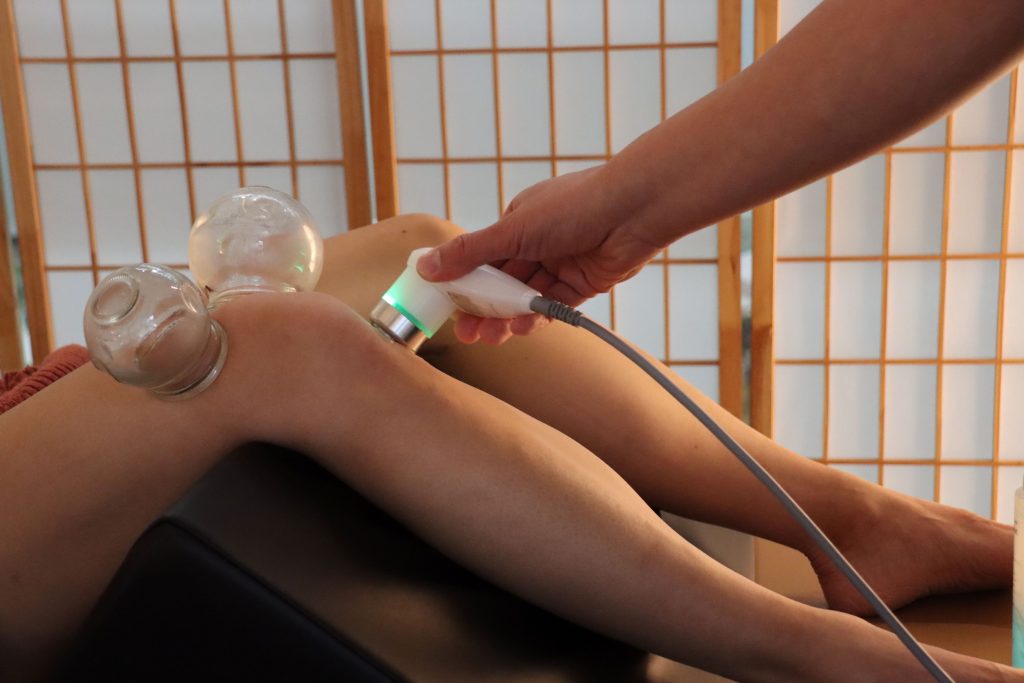
Cupping Therapy is a non-invasive treatment technique that creates suction on the skin using silicone, glass, plastic and bamboo. In our Burnaby Physiotherapy clinic, we use glass cups with smooth round edges, which allow for smooth, controlled suction. They are also more hygienic, and from our experience, our clients respond better to them.
To create the vacuum pressure, a brief heat source (fire in our case -fire cupping) is introduced inside the cup before it is placed on the skin. The heat warms the air inside the cup, not the glass cup itself, so there is no risk of burning when performed correctly. As the air cools after the introduction of the heat source, it contracts and forms a gentle suction that provides lift to the skin and soft tissues.
The amount of suction is adjusted by your Physiotherapist based on your comfort, your condition, and the treatment goals.
Cups may be:
- Left in place (static cupping)
- Moved over the skin with lotion(cupping massage)
- Placed along acupressure points or muscle tension lines
Depending on the pattern used, cupping can help with circulation, stimulation of acupuncture points, improve lymphatic flow, myofascial tension, and relaxation.
What Does Cupping Therapy Feel Like?
Clients often describe cupping as a pulling or lifting sensation on the skin. Stronger suction (more heat source) or moving the cups can intensify the feeling but most people find it comfortable or even relaxing. However, if you have really tight and sensitive muscles, a stronger suction can be uncomfortable. Your Physiotherapist will always adjust the suction strength to keep the treatment within your comfort level. It should never be painful!
After treatment, many clients feel:
- Looser muscles
- Decreased muscular pain
- Reduced tension
- Improved mobility
- A sense of relaxation/stress relief
- Occasional mild discomfort in the area of cupping
- Possible sleepiness!
Why Does Cupping Leave Marks?
Cupping may leave circular marks on the skin that can last from a few days to a week. These marks look like bruises, but are not painful.
Before treatment, especially if you have an event, vacation, or will be wearing clothing that exposes the area where cupping therapy is performed, simply let your Physiotherapist know so they can adjust the technique, or not use it at all.
Traditional Chinese Medicine (TCM) Explanation
In Traditional Chinese Medicine, darker marks represent stagnation of qi and blood. Cupping helps improve the flow of qi, releasing stagnation and restoring balance.
Physiological Explanation
From a Western perspective:
- Suction dilates and may temporarily rupture capillaries.
- New, stronger capillaries form afterward.
- Stronger capillaries help circulation, supports healing.
Common Conditions Cupping May Help
Cupping can be helpful for:
- Muscle tension and stiffness
- Back and shoulder tightness
- Neck pain and headaches, migraines
- Postural strain
- Sore muscles from sports, work and play
- Myofascial pain
- Trigger point discomfort
- Reduced mobility
- Stress Relief
- Improving Circulation
- Speeds up recovery from physical activity
- Relieving Stress and Improving relaxation
It is often combined with manual therapy, exercise therapy, acupuncture, or IMS for improved results.
How Does Cupping Help? (Mechanisms)
Cupping has been used for centuries, and the exact mechanism behind its effectiveness is still debated. Although research is limited due to challenges in designing controlled studies, several theories help explain why cupping works well for musculoskeletal issues. In the past, the effectiveness in cupping was reasoned to be the removal of evil spirits in the body (unlikely to be true), thus discrediting the use of this therapy for various medical conditions. But undoubtedly, this therapy continues to work well as a supplement and/or sole therapy for certain conditions.
Neural Mechanism Theory (Pomeranz 2001)
Cupping is commonly applied along meridian acupuncture or trigger points. Stimulating these areas activates small-diameter nerve fibers, which send signals to the spinal cord and brain.
This can trigger the release of natural chemicals including:
- Endorphins
- Monoamines
- Serotonin
These substances help modulate pain and promote relaxation.
Mechanical & Physiological Stimulation
The suction from cupping affects layers of tissue between the skin, fascia, and muscles. This may:
- Create a mild inflammatory response
- Increase blood flow and lymphatic activity
- Promote tissue healing
- Reduce sensitivity of the nervous system
- Release fascial restrictions
- This “lifting effect” can help decompress tight tissues and reduce muscle tension. We think of the pulling effects like a reverse massage, where instead of pushing down on the tissues, it is lifting the layers away from each other.
Why Choose EastWest Physiotherapy for Cupping Therapy?
- Private treatment rooms with one-to-one care. No curtained rooms, full confidentiality allowing you to focus on healing and recovery.
- Experienced physiotherapists trained in traditional cupping techniques
- Integrated Eastern and Western approach in treatment techniques
- Can be combined with manual therapy, exercise rehab, and acupuncture
- Controlled suction tailored to your sensitivity and condition
- Convenient North Burnaby location near Brentwood, Willingdon Park, and Highway 1
- English, Cantonese, and Mandarin spoken
Frequently Asked Questions
Will cupping leave marks?
Yes, temporary marks may appear but typically fade within a few days. They are not bruises and usually do not hurt.
Is cupping painful?
Most people find cupping comfortable. You may feel strong pulling if high suction is used, but this is always adjusted to your preference. If your muscles are very tight and sensitive, there can be some discomfort but your Physiotherapist will adjust the treatment accordingly
Can cupping be combined with physiotherapy?
Absolutely. We often pair cupping with manual therapy, exercise rehabilitation, acupuncture, or IMS for maximal results.
How many sessions do I need?
This depends on your condition and goals. Many clients experience relief after one or two treatments. Some clients prefer regular use (weekly, monthly) for general maintenance.
Book Your One-to-One Physiotherapy Session
Curious if cupping can help your muscle tension or pain?
Book your private physiotherapy session at EastWest Physiotherapy in Burnaby today.